Childproofing Your Home4/16/2018 0 Comments Making sure your kids are safe is always on the top of the mind for parents. So this Spring, along with your Spring cleaning, do some Spring safety-ing. First things first, check your smoke alarms and carbon monoxide detectors. Make sure the batteries are new and working. For a general sweep through the house, make sure anything that a child can trip over is cleaned and out of the way. That includes extension chords or wires that should be tucked away and hidden.
As for security, all doors and windows should have properly functioning locks. Make sure latches haven't been broken off and that everything is tightly fastening. For an extra step, a home security system is always a smart thing to research and invest in to keep your mind at peace. The kitchen is a hot spot for danger to children. So, as you are cleaning out, make sure to reorganize as well. Lower cabinets, or any area that can be accessed by children should be clear of sharp items, chemicals, suffocation hazards like plastics bags and any medication. Again, chords should hidden and never plugged in and stove knob covers should be considered as an extra precaution. In the bathroom, always tend to your children when baths are being drawn. Children can drown in shallow water, so never leave a young child alone. Also, be aware of hiding your chemical cleaning products and not having chords near a child's reach or water. For a complete blog of tips, visit ADT's Safety Tips to Keep Your Child Safe at Home
0 Comments
40+ Beautiful New Ways to Decorate Easter Eggs3/14/2018 0 Comments Whether you celebrate or not, decorating Easter eggs can be a fun Spring activity for any kid. Check out these creative ideas by House Beautiful!
40+ Beautiful New Ways to Decorate Easter Eggs
0 Comments
It's All About the Ceiling1/22/2018 0 Comments
0 Comments
2018 Decor Trends1/8/2018 0 Comments Hot 2018 Decor Trends are Here and HouseBeautiful has 16 decorating tips that will make your home trending in the New Year!! View the full article: 16 Décor Trends That Are Going to Be Hot in 2018
0 Comments
Here are a few designs we just couldn't resist sharing! Prepare to be amazed ... Getting Your Home Ready for Thanksgiving11/16/2017 0 Comments If you are hosting Thanksgiving this year, you might be stressing out about how to get ready. Fear not, we have accumulated a checklist to help you get ready for your guests. This way you too can be thankful for a fun evening filled with good company and good food.
Cleaning:
0 Comments
A Guide for First Time Homebuyers9/6/2017 0 Comments Buying your first home can be overwhelming. There are a lot of factors that go into play that make the process nerve-racking and exciting at the same time. So, how should you prepare?David Weliver at Money Under 30 gives us some steps to take to make the first time homebuying processes easier. Read below or click Buying Your First Home? Make Sure You're Financially Prepared With These Steps to learn more.
Buying Your First Home? Make Sure You’re Financially Prepared With These Steps By David Weliver • June 27, 2017 Getting ready to buy your first house can be daunting. Credit scores, down payments, and mortgages are all on your mind. Here’s a guide to help you get ready to make one of the biggest purchases of your life. Buying your first home can be one of the most exhilarating — and stressful — moments of your life. But armed with the right information, you can shop for a house, apply for a mortgage, and close the deal with confidence. Step 1: Determine how much house you can afford The first thing to do before buying a home is to make sure it’s the right time to do so. Generally speaking, owning a home pays off financially if you will live in it for at least five years. Otherwise, there’s nothing wrong with renting. Your actual numbers may vary, but you can play with scenarios using our rent vs buy calculator. You might disagree, but I don’t believe you should treat your home as an investment. Yes, hopefully it will appreciate over time. But you should buy it because you want a home, not an investment. That means you should never stretch to buy your primary residence thinking you can take cash out or flip it for a quick profit in a few years. Only buy a house that you can afford today! Although it may not always be feasible if you live in an expensive real estate market, try to keep your total housing payment under 30 percent of your gross monthly income. When you spend much more than that on your mortgage, you risk becoming “house poor” — you might live in a beautiful home but find it difficult to save or even cover other monthly expenses. Step 2: Prepare your finances for the mortgage process The last thing you want to do is find your dream home only to discover you’re not financially qualified to buy it. To guarantee you’re financially ready to buy your first home, you’ll need good credit, cash to close, and a verifiable income. Check your credit Hopefully this isn’t a a surprise, but getting a mortgage requires a good credit score. It’s a good time to check your credit reports for errors and possibly invest in a few months of a daily credit score monitoring service. A fast way to improve your score by a few points is to pay down credit card balances and stop using them for two months before you apply for a mortgage. Also, you’ll want to avoid applying for credit (for example, a new credit card or car loan) until after you’ve closed on your new home. If you’re buying a home with a spouse or other co-buyer, your mortgage lender will likely consider both buyers’ credit scores in the application process. That’s not to say you’re necessarily doomed if one person’s credit isn’t as good, but don’t count on things going off without a hitch just because one buyer has a stellar score. Finally, remember that improving your credit score significantly can take at least six months, so get started if you need to! Save cash for a down payment and other expenses In addition to making sure your credit score is in order, you’ll also want to consider the cash you’ll need to make buying your first home a reality. Of course there’s your down payment — typically between 3.5 and 20 percent of the purchase price. As you save money for your down payment, avoid the temptation to invest in the volatile stock market with money you hope to use in the next year or two. While you might be tempted to try to earn a greater return on your money than an online saving account paying one percent, the greatest risk is not having your money available when you’re ready to buy a house. As you save, don’t underestimate how much money you’ll need — you might be surprised at how much cash you’ll need for closing. Get your documentation in order Finally, if you’re close to putting an offer on a home, begin to collect documents that you’ll need to verify your finances on the mortgage application: paystubs, W-2’s, bank statements and, if you have freelance or self-employment income, copies of your last two tax returns. Step 3: Go shopping for a mortgage Too often, home buyers leave mortgage shopping to the last minute and watch their dream home go to another bidder who had financing in order. Mortgage pre-approval is a free and non-binding process that presents you as a serious, qualified buyer when buying your first home. Mortgage types Comparing two mortgages can be confusing. There are fixed-rates and adjustable rates, or ARMs, which are priced very differently. You can take out a mortgage for 30 years or as little as five years (interest rates are typically higher the longer the term of the loan). Most buyers should look at fixed-rate mortgages and, indeed, the 30-year fixed rate mortgage is the most common kind of loan, by far. Still, it doesn’t hurt to become familiar with how mortgage rates work and the different kinds of loans that are available. You may also want to run some scenarios through a mortgage calculator to see how different terms and rates will affect your monthly payment. Mortgage fees To make matters worse, mortgage lenders charge fees that aren’t necessarily reflected in the interest rate. There can be fees for appraising the home, checking your credit, and preparing documentation. In some cases, you may be offered the option to pay “points” at closing that will reduce your interest rate. Points are essentially prepaid interest. This can be a tricky decision, but it can make sense if 1) you can afford to put down the extra cash and 2) expect to carry the mortgage for many, many years. It can be a good habit to compare mortgage rates online regularly. Private mortgage insurance (PMI) If you put less than 20 percent down, your lender will likely charge you a monthly premium for what’s called private mortgage insurance, or PMI. Private mortgage insurance protects the bank in the event you default on your loan and the value of your home declines significantly. Where to get mortgage rates and pre-approval The only wrong way to get a mortgage is to walk into your local bank, ask for a loan officer and accept whatever rate she gives you without ever shopping around. You can compare rates with any number of leading online mortgage lenders or find a local mortgage broker who will shop your application to multiple lenders on your behalf. I often also recommend using the site, LendingTree to quickly get four or five competing mortgage rates from different banks. These rates will be more accurate than the ones you see in advertisements and websites because banks provide real rates based upon your credit profile and the location and value of the home you want to buy. Learn more about getting mortgage quotes and pre-approval from LendingTree. Summary Buying your first home is exciting, but there’s a lot to think about before you start looking. Start by getting all your finances in order, and using online tools to compare mortgage rates, and manage your credit score. Read more
0 Comments
Tips for the Perfect Paint Job9/1/2017 0 Comments 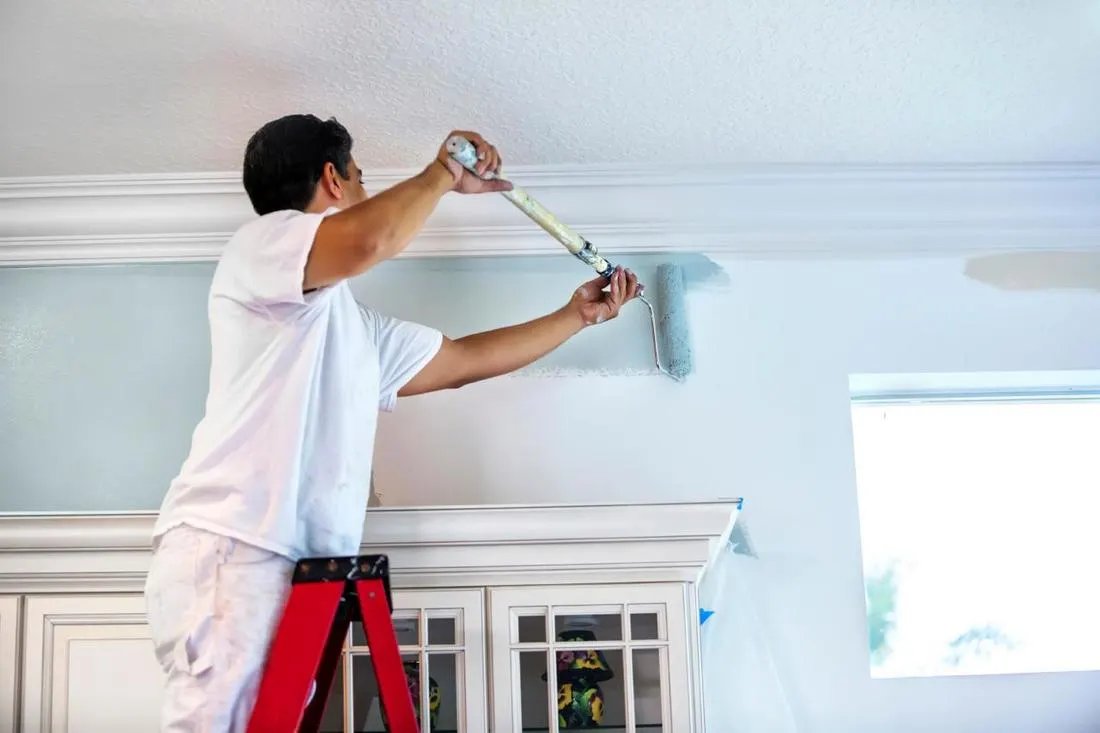 For some, painting is an easy task and one that has been undertaken many a time. For others, however, it can be daunting. So, here are a few easy tips to make painting fun, easy and quick.
Prep and Tape Taping and getting ready to paint is quite arguably the most time-intensive job. Doing it right the first time can save time and a headache later. So, remember to clean the surface, apply the tape and press it down so that it sticks, and let the tape adhere. The more firm the tape is attached to the wall, the more likely you will get that perfect line. Make sure to not only tape the walls, but the floors as well. Lining where the floor connects to the walls with paper and applying tape to create that straight line will protect your floors. The Drier, The Better When the weather is dry, so is your paint. Paint takes longer to dry on a humid day and can cause drips. Either protect the floors as described above or wait until its a sunny day. Clean Surfaces Make sure that you sand away any loose paint or dust from the walls. If there are loose particles on the walls, then paint won't apply as smoothly and is more inclined to flake off. For the best adhesive situation, it is worth taking the time to remove any loose pieces from the walls. Feather It Out The last thing you want is to be done with your paint job and realize you can see the lines where the rollers went. Make sure to avoid harsh lines by feathering out the edges of your paint application. This will help blend the paint. Protect the Ceiling It is easy to get carried away and hoist the rollers all the way to the ceiling. Because the roller is round and you are going towards a right angle, however, you most likely will get paint on the ceiling. So, go a few inches from the ceiling and use an edger to do the rest. Pain the Trim First Trim can be a small and detailed project. So take away the added stress of being perfect within the small confines and paint the trim before the walls. This way, when the trim is done, you can tape off the trim and just have to worry about the bigger surface.
0 Comments
What's The Best Roof For Your Home8/4/2017 0 Comments Choosing the right roof can be quite the process. Not only do you want something that will last against sun and inclement whether, but you want something that will resell well and look great with your style. Below is a guide of different roofs from Roof Cost Estimator to help find the perfect roof for your home. Visit Roof Cost Estimator for an even more in-depth look at these roofs.
The Dome Roof: Dome roofs look like a bowl. They are unique, aesthetically pleasing and durable. The Gable Roof: This triangular, peak shaped roof is found very often in the U.S. They are simple designs that are generally cheaper to build and are advantageous for getting rid of water and snow. However, they don't perform as well in high wind areas, as wind can take a major tole on these roofs. The Hip Roof: This type of roof slopes on four sides. They are all equal and connect to a ridge-like top. They are stable and resistant to wind and snow. This type of roof, however, can be more expensive and lend itself to more leak potential. The Mansard Roof: This French style roof has four flat or curved sides sides with a double slope on each side. Because they lend themselves to extra living space potential, this roof is great for resale. They are also aesthetically appealing, so using a cool, long lasting material such as zinc or copper can help with resale as well. The Grambel Roof: This barn-style roof has two slopes. These roofs can be quite attractive and lend itself to a Dutch Colonial or Georgian style homes. Much like the Gable Roof, the Grambel is not recommended for high wind areas and can be less expensive. Make sure, however, to maintain these roofs, as leaks can occur. The Flat Roof: Flat roofs are essentially flat with only a small pitch to allow for drainage. Long term expenses and maintenance can become a problem, as the lack of a steep pitch can lead to water damage in areas of lots of rain and snow. These roofs are mostly found in commercial areas. The Skillion Roof: This roof has a single slope that leans so that water and snow can run off. They are mostly used for sheds or porches, but are becoming a popular style for modern homes. The Jerkinhead Roof: This Gable, Hip Roof combo is expensive, but allows for more stability against wind and rain. It also allows for additional living area: a great resale incentive. The Butterfly Roof: This roof is found in modern, eco friendly designs usually in tropical areas. With V's sloping up and down and meeting in the middle, the roof looks like a butterfly's wings. Having the roof angle upward away from the home allows for more light, more natural warmth and an open feel. The slope and valley-like collection area also makes for an environmentally smart water collector. These roofs can be expensive to build and maintain, but save costs in other areas. The Bonnet Roof: Reverse of a Mansard roof, this roof has two slopes, the lower slope at less of an angel than the upper slope. This roof is great for an outdoor porch that you hope to utilize, as the lower slope conveniently hangs over the home to allow for shade. Plus this overhang protects walls from water damage. The Saltbox Roof: This roof has two slopes, one of which is flatter and leaning and the other a more normal slope. You can find these in Cape Cod. They are good for allowing water runoff but can be costly. The Sawtooth Roof: Found in modern design, these roofs transition between vertical and sloped roofs, lending itself to the look of the blades on a sawtooth. They are great for an eco-friendly house, as more sunlight is let in. However, leaks can cause for costly maintenance. The Curved Roof: These roofs are curved and very popular in modern design. With the arch shape, this roof is not only aesthetically pleasing, but very wind resistant. The Pyramid Roof: This roof, like a Hip Roof, has all four sides coming together. They are extremely wind resistant and can keep energy bills down as well. And of course, a combo of all of these roofs is great as well! Mix and match to make the best roof for your home!
0 Comments
Grilling Safety8/2/2017 0 Comments Summertime is the season for firing up the grill and doing some outdoor cooking. Making sure you use safe grilling practices are important so that you can keep the party going all summer long. Below are a few things to keep in mind to keep you and your guests safe.
Protect Your Property: House fires can happen if grills are too close to your home or positioned under a wooden balcony or overhang. So, make sure to get the grill away from your house to allow any smoke or fire build-up to be in an open area that won't catch your home or trees on fire. Make sure to also position it away from hanging decorative items like hanging plants and umbrellas. And NEVER grill inside! Check for Leaks: You want to make sure that there aren't any gas leaks. This can be done with a homemade mix of half liquid dish soap and water. If the mix bubbles when the gas is turned on, you know to tighten up that area on the hose or to get it replaced. Keep it Clean: A clean grill is a safe grill. Cleaning your grill after each use not only ultimately makes the cleaning process easier, but rids the grill of built up fats and grease that can become a fire hazard. Turn On Tips: Make sure that before you turn on the gas and fire up the grill you open the lid. If anything has built up, it will burn off as the grill heats up. If you keep the lid closed while you are heating it up, those resides will start to burn and when you open the lid, you have the concern of burning your face when that burning residue is released. To be prepared, it is a good idea to have sand, baking soda, or a fire extinguisher close to the grill in case you do have a need to put the fire out. Avoid water when putting out a grease fire, as this can only make the problem worse. Focus: Make grilling your top priority. If a fire does start and you are not around to address it immediately, your problem could get a lot bigger. So, relax, enjoy the summertime air and grill away. Your friends or family can get the other things prepped for you. Also make sure young kids and pets stay away from the grilling area not only while dinner is cooking, but a few hours after as well. Less Fat, Less Fret: The less fatty foods you cook at once will help decrease the probability of fat build up and fire hazard. Plus, cooking less fatty foods will contribute to a healthier lifestyle. Stabilize: Make sure your grill is on a flat surface that will keep it stable and from moving around or tipping. A deck or concrete patio has solid surface, but things such as flagstone patios or grass can be quite different. (Not to mention that having your grill on grass is another big safety hazard).
0 Comments
<<Previous
|
AuthorI am a real estate professional, serving Boulder and Denver, Colorado. My extensive knowledge of the market, coupled with my commitment to provide extraordinary service, has resulted in hundreds of successful transactions. Let me help you buy or sell your home. Archives
May 2018
Categories
All
|
 RSS Feed